

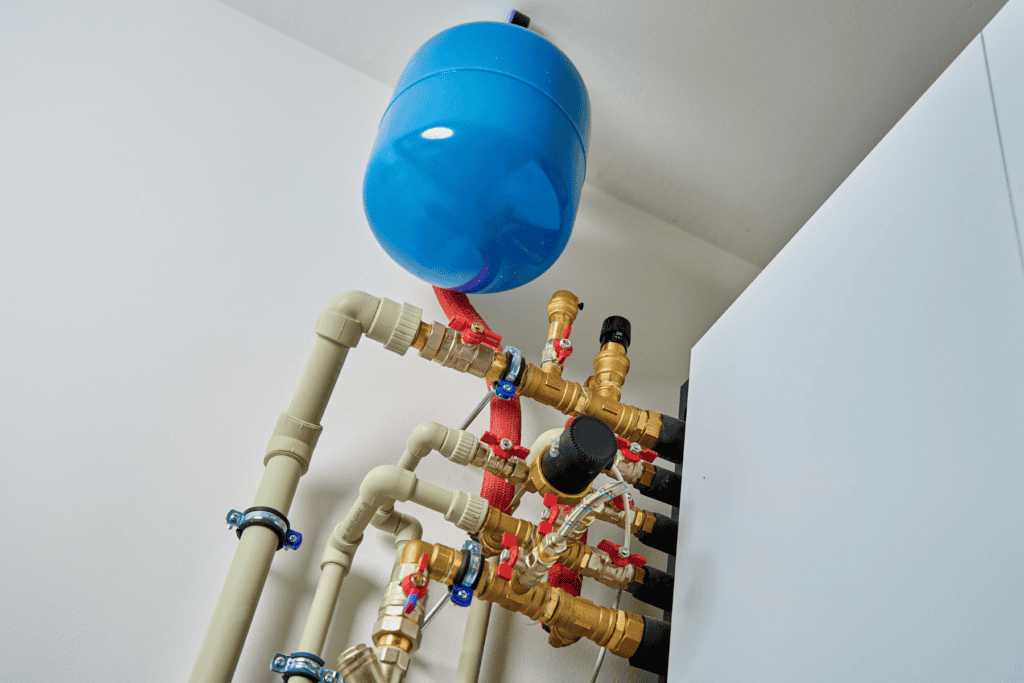
A boiler expansion tank is a small tank connected to a hot water heating system that gives heated water room to expand, keeping system pressure in a safe range so the pressure relief valve does not open. Water expands naturally whenever temperature rises inside the heating equipment. Because closed hydronic systems have fixed boundaries, that expanding fluid has nowhere to move on its own without creating severe pressure spikes. Homeowners seeking dependable boiler services in Washington, DC, often encounter this small component during routine maintenance or system inspections.
The expansion tank is one of the smallest parts of a boiler system, making it easy to overlook until system pressure climbs or the relief valve drips. This guide explains how the tank functions, why modern designs differ from older models, and what warning signs point toward equipment trouble. Spotting these symptoms early helps protect your boiler components and prevent unexpected heating interruptions during cold weather.
What Is a Boiler Expansion Tank?
A boiler expansion tank is a safety vessel designed to absorb the thermal expansion of water as your heating system operates. As water heats from room temperature to operating levels, its volume increases. The right expansion tank for a boiler provides dedicated expansion space, preventing dangerous pressure buildup in your pipes and radiators.
How a Hydronic Expansion Tank Manages System Volume
A hydronic expansion tank acts as an essential buffer for your closed-loop heating network. Water is practically incompressible. Without an air cushion to absorb the expanded liquid volume, mechanical stress quickly builds in the boiler’s cast-iron sections, circulator pumps, and pipe fittings. By managing this expansion smoothly, the tank preserves steady operating conditions and keeps the system from discharging hot water onto your floor.
Heating systems in the DC area rely on this balance throughout the winter months. When the tank operates correctly, your home stays warm without erratic pressure-gauge fluctuations. If this component fails, normal water expansion can immediately trigger safety devices or damage delicate internal seals.
Boiler Expansion Tanks vs. Domestic Water Heater Tanks
Many homeowners confuse their heating expansion tank with the tank installed above a standard domestic water heater. Although both vessels manage thermal expansion, they serve completely different piping systems and handle different water chemistry. A boiler tank connects to a closed heating loop filled with non-potable water that continually recirculates through radiators or baseboards.
In contrast, a domestic water heater connects to your home’s potable drinking supply. Tanks meant for potable water require specific internal coatings and food-grade rubber liners to protect domestic water purity. If you need assistance distinguishing these units, professional plumbing services in Washington, DC, can inspect both setups to make sure each one is working safely.
How Does a Boiler Expansion Tank Work?
This equipment uses a compressible air cushion to absorb the excess volume created by heated system water. Because air compresses easily while water does not, the air pocket acts like a shock absorber inside the heating loop. As the heating system warms and cools, this internal balance maintains consistent pressure across every zone.
Diaphragm and Bladder Tank Operation
Most modern hydronic heating systems utilize a sealed diaphragm or bladder expansion tank. Inside this steel shell, a flexible rubber barrier permanently separates the heating water on one side from a pre-pressurized air cushion on the other. When the boiler fires and water expands, the expanding fluid pushes against the rubber membrane, compressing the air pocket. Once the heating cycle finishes and the water cools, the compressed air pushes the water back out into the heating pipes.
This flexible separation prevents air from dissolving into the circulating heating water. Air bubbles in a closed hydronic loop can accelerate pipe corrosion and cause noisy air pockets inside radiators. Keeping the air cushion separate helps the system run smoothly through cold Maryland winters.
Conventional Steel Tanks and the Waterlogged Expansion Tank Issue
Older residences often feature conventional steel expansion tanks suspended from basement ceiling joists. Unlike modern designs, these older tanks lack an internal rubber diaphragm. They rely entirely on a direct air pocket resting directly above the surface of the heating water. Over time, that trapped air slowly dissolves into the water and gets carried away through the pipes.
When all the air dissolves, you end up with a waterlogged expansion tank that leaves no room for thermal expansion. Modern bladder tanks can also fail if the rubber liner tears, if corrosion perforates the steel shell, or if the tank loses its pre-charged air cushion. Homeowners scheduling HVAC services in Maryland often choose to upgrade these outdated conventional vessels to modern sealed units.
What Are the Signs of a Bad Expansion Tank?
Common signs of a bad expansion tank include rapid pressure spikes on the boiler gauge and water discharging from the safety relief valve. Because a failed tank can no longer cushion expanding heated water, the excess volume forces system pressure upward during every cycle. Recognizing these physical symptoms early lets you address equipment problems before minor leaks become severe heating system failures.
Warning Signs of Tank Failure
When an expansion tank loses its internal air cushion or develops a ruptured bladder, the whole boiler system starts to struggle. Homeowners can spot potential issues by checking the boiler gauge and inspecting the tank’s exterior during normal operation. Watch for the following physical symptoms when your heating system fires:
- Boiler pressure too high while the burner is actively firing
- A pressure gauge that swings widely between cold resting periods and hot heating cycles
- The boiler pressure relief valve leaking or dripping water onto the floor
- An expansion tank that feels heavy with water or sounds completely solid when gently tapped with a knuckle
- Moisture or water dripping from the air valve located on the tank
- Visible rust, corrosion, or external moisture along the tank body and threaded connections
A leaking boiler pressure relief valve is often the first visual warning sign homeowners notice in their utility room. This safety valve opens automatically when internal pressure reaches dangerous levels, discharging water to prevent serious boiler damage. If you observe any of these warning signs, your expansion tank has likely lost its ability to cushion expanding water.
Critical Safety Guidance and High Pressure Risks
Repeated exposure to excessive pressure continuously strains boiler cast iron sections, pipe joints, and circulator pump gaskets. Never plug, cap, or attempt to disable a dripping pressure relief valve under any circumstances. Capping this valve eliminates the only backup safety release mechanism protecting your home from severe pressure buildup and equipment rupture.
Do not attempt to drain, recharge, or replace an expansion tank yourself. Boiler systems operate under scalding water temperatures and high internal pressure, presenting severe burn risks to untrained individuals. If your relief valve is actively discharging water or pressure remains elevated, turn off the boiler’s electrical switch and call a qualified professional immediately.
Professional Boiler Maintenance and Tank Testing
When an experienced heating technician arrives to evaluate your system, they perform a comprehensive inspection of all pressure-regulating components. The technician isolates the tank, drains residual water pressure, and accurately checks boiler expansion tank pressure to confirm the air charge is set correctly. They also test the automatic water fill valve and verify that the pressure relief valve seats cleanly without sticking or leaking. If the internal diaphragm has ruptured or the shell shows structural corrosion, the technician will recommend a boiler expansion tank replacement.
Preventive care is the most reliable way to avoid unexpected heating breakdowns during the peak of winter. Scheduling yearly boiler maintenance helps identify and correct small air charge losses before they cause pressure spikes or valve discharges. Routine annual tune-ups can help extend the life of your heating equipment and provide quiet, efficient warmth throughout your home.
Schedule Dependable Boiler Service With Sila
If your boiler shows rising pressure or a leaking relief valve, prompt professional service can restore safety and comfort to your home. Homeowners in Beltsville, MD, and surrounding regions have trusted Sila for quality heating and cooling solutions since 1989. Our licensed technicians have extensive experience diagnosing complex hydronic systems and repairing critical pressure control components.
We provide same-day service and upfront pricing so you know what to expect before any work begins. Homeowners seeking dependable heating services can turn to our staff for professional HVAC services in Virginia and the surrounding Mid-Atlantic communities. Contact Sila today to schedule your boiler inspection or expansion tank service with our licensed technicians.