
When evaluating reverse osmosis vs. carbon filter options, neither system is better for every home. A carbon filter is best for improving taste and odor while reducing chlorine, making it an effective choice for whole-house treatment. Reverse osmosis removes a much wider range of dissolved contaminants and is usually installed under the sink for drinking and cooking water. Many homeowners use both systems together for the most complete coverage.
Homeowners in Beltsville, MD, and nearby communities often ask our plumbers which filtration technology delivers the best results. The right answer depends on what is currently in your water and where you want to treat it. Understanding the differences between a carbon filter vs. reverse osmosis setup will help you choose the right water filtration equipment for your household.
How Carbon Filters Treat Household Water
Activated carbon filtration is one of the most common methods for treating residential water supplies. These systems use treated carbon media to attract and capture impurities as water passes through the filter bed. Installing a whole-house carbon filter allows you to treat incoming water before it reaches any faucet, shower, or appliance.
What Does a Carbon Filter Remove?
A carbon filter removes chlorine, many organic chemicals, and compounds that create foul tastes and unpleasant odors. When equipped with catalytic carbon media, these filters also successfully reduce chloramine from treated municipal supplies. Some carbon filters also catch fine sediment as water passes through.
Carbon filtration doesn’t remove dissolved minerals or salts, and it does little for many other dissolved contaminants. Because these dissolved substances do not bind to carbon surfaces, they pass straight through the filter and remain in your tap water. If your water contains high levels of dissolved solids, carbon filtration alone will not address those specific issues.
Advantages and Limitations of Carbon Systems
Carbon systems offer several practical advantages, including high water flow rates and whole-home filtration coverage. They produce no drainage wastewater and require minimal routine maintenance beyond scheduled cartridge or media replacements. The primary drawback is their targeted filtration scope, which leaves dissolved contaminants and minerals in your water supply.
How Reverse Osmosis Works in Your Home
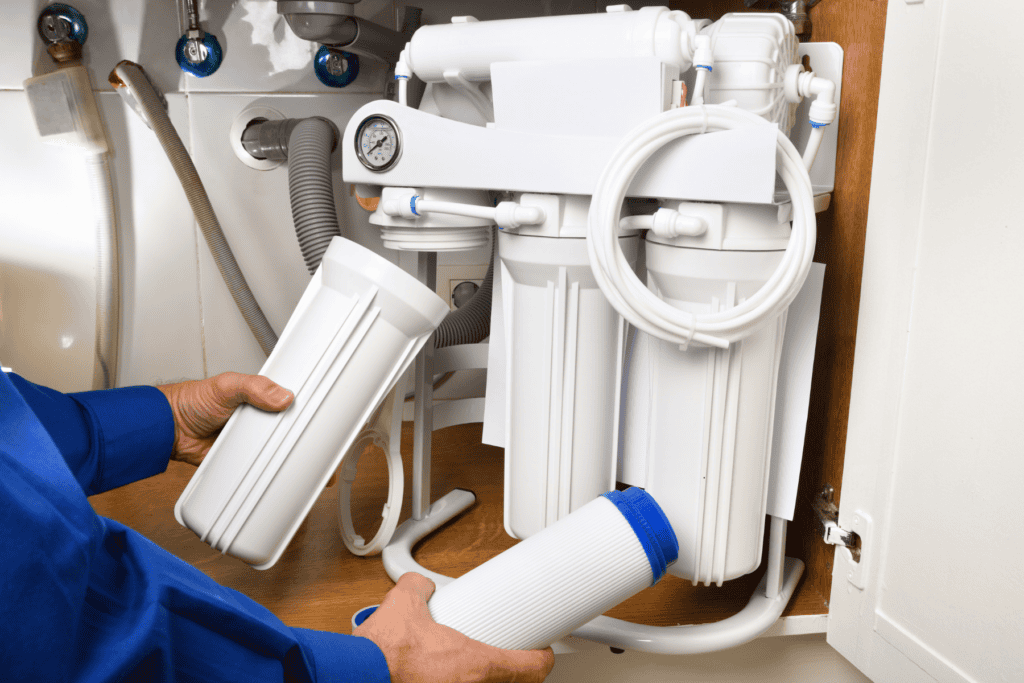
Reverse osmosis uses pressure to push incoming water through a semi-permeable membrane with microscopic openings. Most residential units include sediment and carbon prefilters that catch large debris and chlorine before the water reaches the delicate membrane. A dedicated pressurized storage tank holds the purified water until you turn on your kitchen dispenser.
What Does Reverse Osmosis Remove?
Reverse osmosis removes a wide range of dissolved solids, dissolved salts, heavy metals, nitrates, and microscopic contaminants. Because these systems use carbon prefilters, they also eliminate chlorine, organic chemicals, and unpleasant odors just like a standard carbon unit. When comparing reverse osmosis vs. filtered water from basic countertop pitchers, reverse osmosis provides significantly deeper contaminant reduction.
Reverse Osmosis Pros and Cons
Reverse osmosis pros and cons center on thorough purification balanced against slower production and drainage requirements. The main advantage is thorough filtration that removes most dissolved contaminants from drinking water. On the other hand, the process sends some water down the drain during filtration and produces purified water slowly.
The intense filtration process also removes dissolved minerals that contribute to natural water taste, though optional remineralizing cartridges can restore them. Because these systems work slowly and require dedicated storage, an under-sink reverse osmosis system at the kitchen tap is far more practical than a whole-house setup. This focused placement gives you highly filtered water for drinking and cooking without restricting flow throughout the rest of your home.
Is Reverse Osmosis Better Than a Carbon Filter?
Reverse osmosis isn’t inherently better than a carbon filter because each system solves different water-quality problems. A carbon filter provides high-volume treatment to improve taste and remove chlorine at every tap across the house. In contrast, reverse osmosis provides intensive purification at a single faucet for drinking and cooking.
How to Choose the Right Filtration Setup
Selecting the right equipment depends on your specific water source and household priorities. Homes connected to municipal supplies face different water treatment needs than properties drawing from private wells. Evaluating a few core factors will help determine if a reverse osmosis vs. carbon filter system fits your household.
- Water supply source: Municipal water often contains chlorine or chloramines that carbon handles well, while private well water may require specialized pre-treatment for sediment or high mineral content.
- Coverage preferences: Decide whether your household needs treated water at every sink, shower, and laundry line, or whether concentrated purification at the kitchen tap meets your needs.
- Mineral hardness: If you notice mineral scale on fixtures, neither filter replaces a dedicated water softener designed to remove calcium and magnesium.
- Water testing results: Reviewing a municipal water report or scheduling a professional water test shows precisely which contaminants exist in your supply.
Many homeowners find that combining both systems provides the ideal answer to their water quality concerns. Installing a whole-house carbon filter removes chlorine and odors before water enters your water heater and fixtures. Adding an under-sink reverse osmosis unit at the kitchen sink gives you highly filtered drinking water. This combination protects your plumbing infrastructure while delivering crisp water for daily consumption.
Why Professional Sizing and Installation Matter
Proper system sizing and professional installation ensure that your chosen water filtration equipment works reliably without compromising household water pressure. A licensed plumber checks incoming water pressure, calculates peak flow rates, and selects equipment designed to handle your daily demand. Improper sizing can cause pressure loss during heavy water use or cause filter media to exhaust prematurely.
Reverse osmosis units require dedicated drain connections, proper line routing, and secure under-sink mounting to operate correctly. Improper drain line installation can lead to slow production, gurgling noises, or water leaks inside your kitchen cabinets. Establishing a routine maintenance schedule with an experienced technician keeps filters fresh and ensures membranes perform reliably over time.
Our plumbers help homeowners across Washington, DC, Maryland, and Northern Virginia with water quality problems. We inspect incoming water lines and perform whole-home repiping when older pipes affect water clarity. Correctly sizing and installing your filtration equipment protects your plumbing investment for years.
Schedule Water Filtration Services with Sila
Choosing between a reverse osmosis vs. carbon filter configuration becomes simple with honest guidance from our team. Serving homeowners since 1989, Sila delivers dependable plumbing services with upfront pricing and licensed plumbers you can trust. Our team provides same-day service to diagnose plumbing issues and help you choose the ideal filtration setup for your property.
If you live in Beltsville, MD, our technicians can support water testing and system installation. We also serve homeowners in Washington, DC, and Northern Virginia. Contact Sila today to arrange a plumbing walkthrough.