

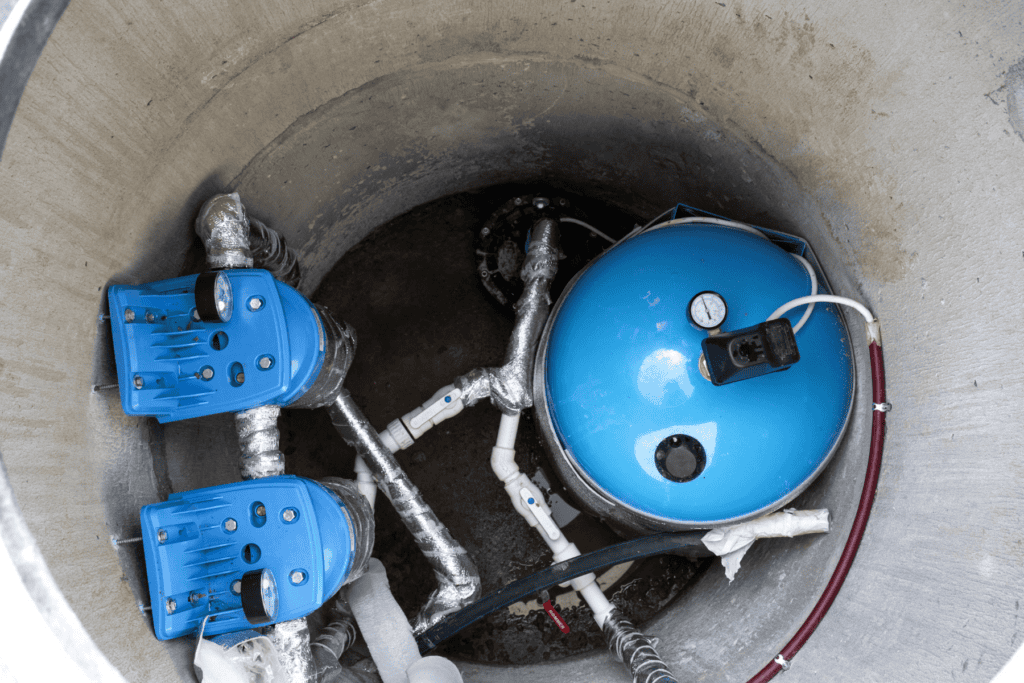
Evaluating well pump replacement cost requires looking at the physical details of your water well system. Every private well uses a specific combination of pumping equipment, electrical wiring, drop pipe, and pressure control components. These items are chosen based on well depth, water table levels, and household water demand. Replacing a well pump involves more than swapping out a single motor underwater. Technicians must evaluate the entire system assembly to ensure consistent water pressure and system safety. According to technical guidelines from the Water Systems Council, proper equipment sizing prevents premature motor failure and electrical overloads.
Private water wells typically range from shallow driven wells under 25 feet deep to drilled bedrock wells exceeding 400 feet. A standard residential well pump operates on 115-volt or 230-volt single-phase electrical power. It delivers between 8 and 12 gallons per minute (GPM) for standard single-family homes. When components wear out, understanding how depth, motor horsepower, and pressure accessories interact helps homeowners make practical repair decisions. This guide details key technical factors, equipment specs, and installation requirements that shape the overall scope of work for private water systems.
Key Factors That Determine Well Pump Replacement Cost
Well depth is the single largest technical variable in any replacement project. Deeper wells require larger pump motors to lift water against gravity and system head pressure. A 0.5-horsepower submersible pump can easily lift water in a 50-foot well. However, a well drilled to 300 feet often requires a 1.5-horsepower or 2.0-horsepower motor running on a dedicated 230-volt electrical circuit.
Equipment weight increases significantly as well depth grows. A typical well installation uses 1-inch or 1.25-inch schedule 80 PVC or flexible polyethylene drop pipe filled with water. In a 250-foot well, the total weight of the pump, pipe, electrical cable, and water column can exceed 300 pounds. Extracting this assembly requires specialized motorized pulling machines mounted on service trucks.
Primary technical factors include:
- Well depth and static water level, which dictate required pump head pressure and impeller staging.
- Motor horsepower ratings ranging from 0.5 HP to 3.0 HP based on peak household flow demand.
- Electrical wire gauge, such as 10-gauge or 12-gauge heavy-duty copper submersible cable.
- Casing diameter, usually 4-inch, 5-inch, or 6-inch steel or PVC casing pipe.
- Wellhead accessibility for heavy equipment trucks and mechanical pipe pullers.
Physical access to the wellhead also impacts installation complexity and labor hours. If fences, steep slopes, or dense trees block truck access, technicians must use portable tripod pipe pullers. This adds manual labor hours. For homeowners needing plumbing services in Virginia, thorough site evaluations help identify access constraints before work begins.
Submersible vs Jet Pumps: Equipment Specs and Performance
Pump design directly affects system efficiency and installation requirements. Private water systems primarily use either aboveground jet pumps or deep-well submersible pumps. Each technology matches specific well depths and operational demands.
Jet pumps sit above ground inside a basement, utility room, or well house. Shallow-well jet pumps use a single suction pipe to pull water from depths up to 25 feet. Deep-well conversion jet pumps use two pipes submerged in the well to handle depths up to 80 feet. Jet pumps rely on atmospheric pressure and suction, which limits their overall pumping capacity. They usually deliver 4 to 8 GPM and require manual priming if the system loses prime.
Submersible pumps operate completely under water inside the well casing. They are installed below the static water line, usually 20 feet above the bottom of the well. Submersibles use stacked centrifugal impellers to push water upward rather than pulling it. This design is highly efficient and can lift water from depths over 500 feet while delivering 10 to 25 GPM. Replacing a submersible unit involves pulling all submerged electrical cable and drop pipe out of the well shaft.
Choosing Between Pump Repair and Complete Replacement
Homeowners often wonder whether a malfunctioning system needs a full replacement or a targeted component repair. Electrical issues outside the well are often simple to fix. A burnt control box, a stuck check valve, or a failed pressure switch can be replaced quickly. Pressure switches typically operate at 30-50 PSI or 40-60 PSI. Replacing a switch restores normal cycling without pulling the pump.
However, mechanical pump failure requires replacing the entire unit. Sediment abrasion can erode internal impellers over time. Lightning strikes or voltage spikes can burn out motor windings underwater. If the pump is more than 10 to 12 years old, replacing the unit is usually more practical than attempting deep-well repairs. Homeowners seeking reliable plumbing services in Washington, DC can prevent premature pump wear by scheduling regular inspections. Adding water filtration installation removes abrasive sand and minerals before water reaches home fixtures.
Pressure Tanks and Auxiliary Components
A well pump does not work alone. It operates as part of an integrated pressure delivery system. The pump pushes water into a captive air pressure tank until the system reaches its cutoff threshold, usually 50 or 60 PSI. When a household faucet opens, air pressure inside the tank pushes water through the pipes. The pump remains off until system pressure drops to the cut-in threshold, usually 30 or 40 PSI.
If the internal rubber bladder inside a pressure tank ruptures, the tank becomes waterlogged. Without an air cushion, water pressure drops instantly when you turn on a faucet. This causes the pump motor to start and stop rapidly, a condition called rapid cycling. Rapid cycling can turn a pump motor on and off dozens of times per hour. This generates excessive heat and destroys electrical start capacitors within weeks.
When replacing a well pump, technicians inspect all auxiliary hardware:
- Pressure tanks: Standard pre-charged diaphragm tanks range from 20 to 86 gallons.
- Pressure switches: Preset 30-50 PSI or 40-60 PSI switches control automatic motor operation.
- Check valves: Spring-loaded brass valves prevent pumped water from flowing back down into the well.
- Control boxes: External start boxes house starting capacitors and relays for 3-wire pump motors.
- Sanitary well caps: Sealed aluminum caps prevent surface water, insects, and debris from entering the casing.
Replacing a worn pressure tank at the same time as the pump protects your investment in new equipment. Working with an experienced plumber in Washington, DC ensures that electrical controls and pressure vessels are properly matched. In addition, consulting experienced whole-house water filter installers helps protect new pressure controls from heavy sediment accumulation.
Technical Maintenance Guidelines for Private Wells
Proper routine maintenance extends the operating lifespan of well pumps and pressure vessels. According to the National Ground Water Association (NGWA), private water systems should undergo annual mechanical and electrical inspections. Regular testing catches minor electrical drift and mechanical wear before major system failure occurs.
Key maintenance procedures include monitoring motor amp draw during operation. A motor drawing higher amperage than its nameplate rating indicates internal bearing friction or voltage drop. Technicians also measure insulation resistance using a megohmmeter to detect deteriorating wire insulation underwater. A megohm reading below 2 megohms indicates wire insulation breakdown, signaling an impending short circuit.
Homeowners can perform basic visual checks monthly. Inspect the area around the pressure tank for leaks or corrosion on brass fittings. Check the pressure gauge on the manifold to ensure the system cuts in and cuts out at the correct PSI settings. Listen for short cycling when water is running in the house. Keeping the area around the sanitary well cap clean and free of standing water prevents bacterial contamination in the wellhead shaft.
Professional Installation and System Evaluation
Installing or replacing well equipment requires specialized electrical and plumbing expertise. Work must comply with local plumbing codes and National Electrical Code (NEC) standards for wet-location submersible wiring. Proper grounding and electrical bonding protect homeowners from power surges and lightning damage.
Before installing a new pump, a complete system evaluation includes measuring well depth, peak flow rate, and static water recovery. Correct pump sizing helps your home maintain consistent water pressure without over-pumping the aquifer. Technicians also test water quality to check for iron, hardness, or acidic pH levels that could corrode new mechanical components. Homeowners should consult licensed professionals to evaluate well production rates and select properly matched system components.
Contact the team at Sila to learn more.