

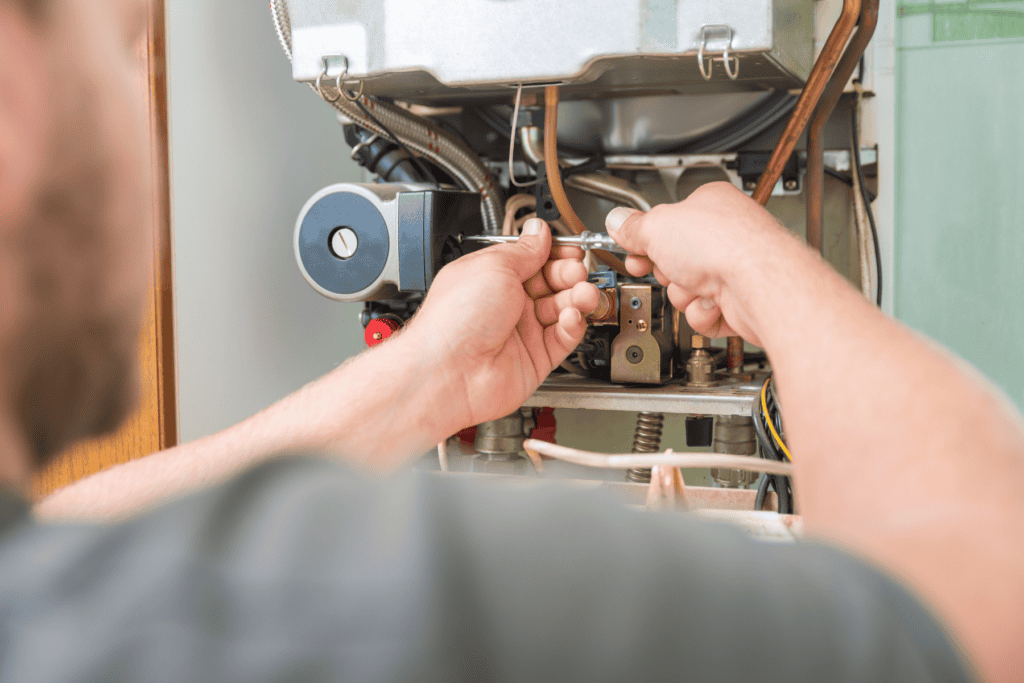
When a heating system struggles to push warm air through your vents, a small electrical component is often responsible. In furnaces that use a permanent split capacitor (PSC) blower motor, a furnace capacitor helps create the electrical phase shift and starting torque the motor needs to operate properly. If this part weakens, your system may blow cool air, hum quietly, or stop moving air completely.
Capacitors experience high heat and electrical stress over years of operation. Cold weather forces your heating equipment to cycle frequently. This constant cycling wears down internal components over time. Understanding what this part does helps you identify problems early. Recognizing warning signs protects your blower motor from permanent failure. In this guide, we review how capacitors work, standard tolerance benchmarks, common failure symptoms, and safe diagnostic procedures.
How a Furnace Capacitor Powers Your Heating System
Heating systems rely on electrical parts to move conditioned air throughout your living space. Burners or electric coils create thermal energy. However, motorized fans must circulate that warmth through your ductwork. The capacitor supplies the torque that gets the blower wheel moving.
The Role of the Blower Motor Capacitor
In standard residential split systems, the air handler or furnace cabinet houses a dedicated blower motor capacitor. Electric motors need a substantial surge of torque to overcome mechanical resting inertia. PSC blower motors rely on a properly rated run capacitor to create the phase shift needed for operation.
The capacitor acts as an electrical storage reserve. It introduces a phase shift in electrical current between motor windings. This shift generates a rotating magnetic field that forces the motor rotor to turn. A run capacitor stays in the circuit while a PSC motor operates, helping it maintain the electrical phase relationship it was designed to use.
Not every heating design relies on a traditional cylindrical capacitor. Many modern high-efficiency furnaces use electronically commutated motors (ECM). ECM units control fan speed using internal microprocessors and direct-current inverters instead of standard capacitors. Standard permanent split capacitor (PSC) motors, however, still rely on cylindrical capacitors across thousands of regional installations.
Start Capacitors Versus Run Capacitors
HVAC equipment can use different capacitor designs depending on the motor and system. Furnace blower motors that use PSC technology commonly rely on a run capacitor, while other motors or HVAC components may use different capacitor arrangements. The correct capacitance and voltage rating must match the equipment manufacturer’s specifications, which is why a qualified technician should handle the replacement.
Common Signs of a Bad Furnace Capacitor
A weakening capacitor may produce noticeable performance symptoms before it fails completely. Internal dielectric fluid and metalized films degrade slowly over thousands of heating hours. Recognizing the symptoms of a bad furnace capacitor can help you avoid costly motor replacements.
Warning Signs of a Bad Furnace Capacitor
Homeowners can often detect performance issues directly from living spaces. Watch for these common operational symptoms:
- A buzzing or humming sound coming from the heating cabinet while the blower fan remains stationary
- A delayed startup where burners ignite but the blower motor hesitates for several minutes
- Weak or sluggish airflow pushing out of supply registers during an active heat call
- The furnace overheating and shutting down on its high-limit switch because heat cannot escape the heat exchanger
- A burning electrical smell or signs of unusual overheating around the furnace
- A blower fan that fails to start at all even though the thermostat calls for heat
A weak or failed capacitor can make a compatible blower motor struggle to start or operate correctly. Continuing to run under abnormal conditions can add stress to the motor, which is why recurring humming, weak airflow, or startup problems should be professionally diagnosed.
Overlapping Electrical and Mechanical Problems
These symptoms do not automatically mean the capacitor is failing. Restricted airflow from a dirty filter, worn blower-motor components, thermostat problems, control-board faults, or electrical connection issues can produce similar behavior. A technician should rule out these possibilities before recommending furnace capacitor replacement.
How to Test a Furnace Capacitor: DIY Checks vs. Professional Diagnosis
Homeowners can safely perform simple initial checks. However, full electrical testing requires specialized tools and technical procedures.
Safe Homeowner Diagnostic Checks
Homeowners can start with basic checks that don’t require opening the furnace cabinet. Confirm that the thermostat is set to heat, inspect the air filter and replace it if it is dirty, and make sure supply and return vents are not blocked. If the furnace produces unusual buzzing, a burning odor, repeated electrical trips, or the blower fails to operate, stop normal operation and schedule professional service.
Professional Multimeter Testing and Tolerance Benchmarks
A qualified HVAC technician can safely isolate the electrical circuit and test the capacitor’s measured capacitance against the rating and tolerance printed on the component. The technician can also check motor operation, voltage, amperage, wiring, and related controls to determine whether the capacitor is causing the symptoms.
Capacitors can retain electrical energy even after equipment power is disconnected, so a trained professional should handle testing and replacement. If testing confirms that the component is outside the manufacturer’s specifications, the technician can install a properly rated replacement and verify correct blower operation.
Testing electrical components involves high-voltage circuits. Like any HVAC capacitor, a furnace capacitor must match the motor and equipment electrical specifications. Choosing professional HVAC service over DIY repairs protects you from shock hazards and ensures correct component sizing for your HVAC system. Qualified technicians also measure operating motor amperage to confirm the blower runs smoothly after component replacement.
Protecting System Lifespan with Regular Heating Maintenance
Maintaining reliable indoor heating throughout the winter requires all electrical parts to operate within factory specifications. When a blower capacitor degrades, the motor works harder, draws excess electrical current, and wears out prematurely.
Routine heating maintenance and repairs catch electrical drift before total system failure. During routine heating maintenance, technicians can inspect electrical connections, evaluate blower operation, check safety controls, and test applicable electrical components based on the furnace design.
Whether you need reliable HVAC services in Maryland, comprehensive HVAC services in Virginia, or professional heating services in Washington, DC, preventative care keeps your equipment running smoothly all winter long. Routine inspections prevent unexpected heating breakdowns during extreme cold snaps.
Schedule Professional Heating Diagnosis Today
If your furnace is humming, struggling to start, or blowing weak air, let experienced technicians handle the electrical diagnosis. Sila provides thorough system inspections, electrical capacitance testing, and dependable component replacements to keep your home warm.
Our team has delivered trusted comfort solutions across the Mid-Atlantic since 1989. When you need skilled heating & cooling services in Washington, DC, or surrounding communities, our licensed technicians are ready to assist. Contact Sila today to schedule a comprehensive heating inspection for your home.