

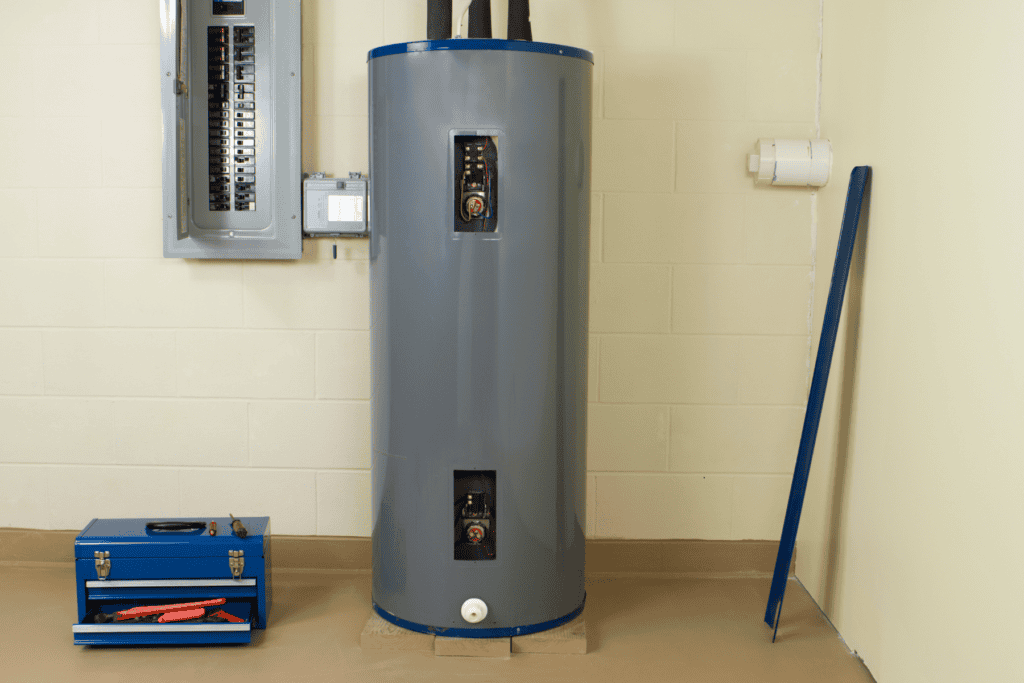
A water heater pressure relief valve leaking on your floor is a clear warning sign. This valve is an essential safety device that protects your home from dangerous pressure spikes. Technicians call it a temperature and pressure relief valve (T&P valve). It opens automatically when the tank’s internal heat or pressure exceeds safe operating limits.
When water drips from the valve, two things are possible. Either the valve is working properly and venting excess pressure, or the component has worn out. Either way, standing water around your tank deserves immediate attention. Professional water heater services can determine whether your system has high operating pressure or needs a mechanical replacement.
For homeowners in Beltsville, MD, the first sign is often a small puddle near the tank or a damp spot under the discharge pipe. A slow drip can turn into a steady leak, so it’s worth finding the cause early. A leaking T&P valve can point to a pressure problem, a temperature problem, or a worn-out valve.
Understanding the Water Heater Pressure Relief Valve and Discharge Pipe
Every tank water heater has a water heater pressure relief valve, and every relief valve needs a discharge pipe to carry water away safely. Knowing where both are and what they do makes it easier to tell a normal release from a problem. It also helps you describe what you’re seeing when you call for service.
Where the Valve Sits and How It Opens
The T&P valve sits on top of the tank or along the upper side wall. It’s placed near the top because that’s where the hottest water collects. Inside the valve, a spring holds it closed, and a probe extending into the tank senses the water temperature. If the tank pressure or temperature exceeds the valve’s rated limit, the valve opens and lets water out until conditions return to a safe range.
The Role of the Discharge Pipe
A dedicated discharge line connects directly to the valve outlet. Many homeowners call this line the overflow pipe. The pipe runs downward from the valve and ends near the floor or over a drain pan. If you find the water heater overflow pipe leaking, the water is coming from the valve, not the pipe itself. It simply provides a safe path for hot liquid to escape without spraying people or nearby electrical components.
Common Causes of a Water Heater Pressure Relief Valve Leaking
Finding the cause of a leaking valve requires checking several parts of your plumbing system. The valve may be reacting to excessive strain, or mineral buildup may be keeping the seal open.
Thermal Expansion in a Closed System
Water naturally expands as it heats up. Many homes have a check valve or backflow preventer on the incoming water line, which keeps water from flowing back into the street main. That creates a closed system, so when the water heater heats a full tank, the extra volume has nowhere to go. Without a working water heater expansion tank to absorb it, pressure builds until the relief valve opens. A valve that drips mostly during or right after a heating cycle often points to this problem.
Excessive Household Water Pressure
Some homes receive high water pressure from the street. Many have a pressure-reducing valve near the main shutoff to bring it down to a safer level, but those valves wear out. When incoming pressure runs too high, it strains the water heater and can push the relief valve to open or weep.
Overheating Water Temperatures
A water heater set too high raises pressure inside the tank and can trigger the temperature side of the valve. This can happen when the thermostat is set too high or when a thermostat or gas control fails to shut off the burner or heating element. Overheating is a safety issue, so a valve releasing very hot water or steam needs prompt attention.
Mineral Buildup and Seat Damage
Hard water deposits settle around the internal valve seat over time. When the valve opens to vent normal thermal pressure, tiny mineral flakes can lodge under the rubber washer. These particles stop the valve from closing completely. As a result, you might notice your water heater pressure relief valve dripping even after system conditions return to normal.
Component Aging and Spring Fatigue
Constant contact with hot water wears down brass components. Internal springs gradually lose tension, and rubber gaskets crack with age. An older valve can start weeping even when pressure and temperature are normal. If the valve is aging or the water heater expansion tank has failed, Sila’s plumbing services in Washington, D.C. include checking both and replacing the worn part.
Diagnostics, Homeowner Safety, and System Inspections
Water heaters operate under high thermal forces. Homeowners need to know which steps they can safely inspect themselves and which tasks require a licensed technician.
What You Can Safely Check
You don’t need to touch the valve or the tank to gather useful information. Notice whether the drip happens all the time or mostly when the water heater runs and afterward, since that pattern helps a plumber narrow down the cause. Check whether the water coming from the discharge pipe is cold, warm, or very hot, and look for any other water around the base of the tank or the connections on top.
Never cap, plug, or crimp the discharge pipe to stop a leak, and never remove the valve. Doing so removes the tank’s main protection against excess pressure and temperature. If the valve is steadily releasing hot water or steam, shut off the water heater if it is safe and call a plumber.
What a Plumber Tests During a Service Visit
When a homeowner calls about a leaking water heater pressure relief valve, a plumber looks at the whole system, not just the valve. Typical checks include:
- Static pressure test: Measures incoming water pressure to see whether it’s running higher than it should.
- Expansion tank check: Confirms whether the expansion tank is holding its air charge or has become waterlogged.
- Thermostat and control check: Verifies that the burner or heating elements shut off at the set temperature so the tank doesn’t overheat.
- Valve condition check: Looks for mineral buildup, corrosion, or wear that keeps the valve from sealing.
After these checks, the plumber can tell you whether you need a water heater pressure relief valve replacement, an expansion tank, a new pressure-reducing valve, or a thermostat repair. If you need an expansion tank, a professional plumber can install one. Regular plumbing inspections can also catch a failing valve or expansion tank before a leak causes water damage.
Preventing Future Water Heater Valve Leaks and Damage
Proactive plumbing care protects your water heater relief valve and helps prevent unexpected water damage. Consistent maintenance keeps your water pressure stable and reduces physical strain on the tank.
Maintenance That Helps
Having a plumber flush the tank periodically removes sediment that can end up on the valve seat. If your home has hard water, a water softener reduces the minerals that build up inside the tank and the valve. It also helps to have your water pressure checked during routine service, since a failing pressure-reducing valve often goes unnoticed until something else starts to leak.
If you have a finished basement or the water heater sits near living space, even a small leak can do real damage, so schedule plumbing repair as soon as you notice a drip.
Resolving Your Water Heater Leaks with Confidence
A leaking relief line is an early warning that your hot water system needs attention. When you find a water heater pressure relief valve leaking, the cause is usually high household pressure, thermal expansion, overheating, or internal mineral buildup.
Take action as soon as you notice moisture, and never block the discharge pipe to stop a drip. A plumber can determine whether the problem is the valve, water pressure, temperature, or the expansion tank, and fix the part that’s actually causing it.
Schedule Professional Water Heater Service with Sila
Founded in 1989, Sila delivers dependable diagnostic and plumbing solutions to protect your home. If a leaking water heater pressure relief valve has created puddles near your tank, our licensed plumbers are ready to help.
Our team tests water pressure, inspects thermal expansion vessels, and replaces worn safety valves to restore balance to your system. Same-day service is available, so you don’t have to live with a dripping valve for long. Contact Sila today to arrange your service visit.