

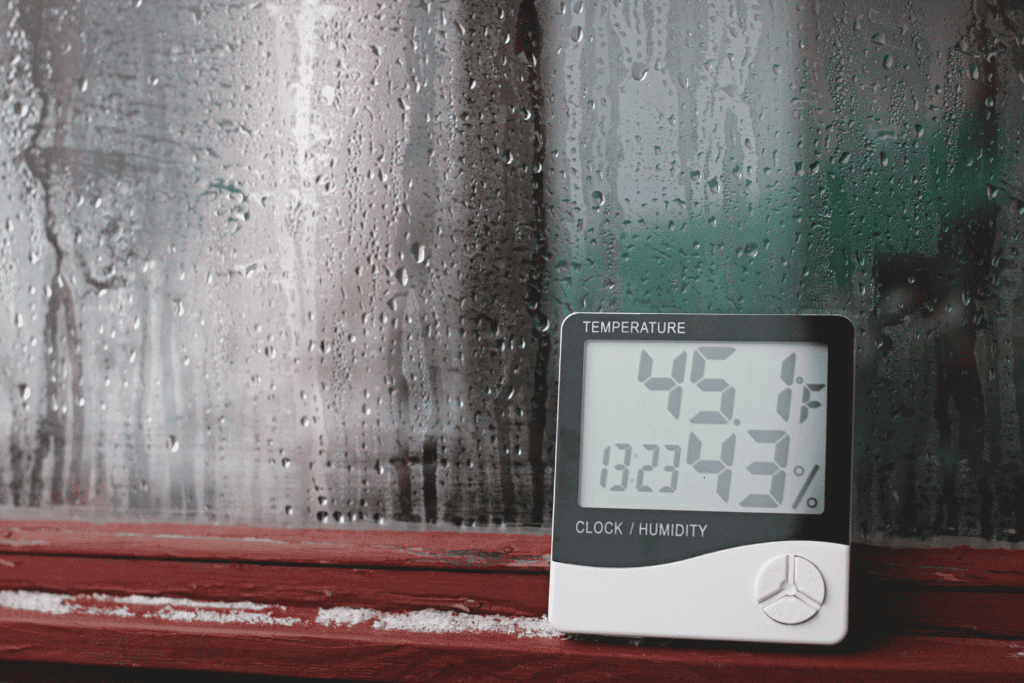
The U.S. Environmental Protection Agency recommends keeping indoor humidity between 30 and 50 percent,¹ and in winter the right setting is usually toward the lower end of that range, going lower as outdoor temperatures drop, to keep moisture from condensing on cold windows and inside exterior walls. Getting the humidifier setting in winter right protects your home and keeps the air comfortable, and a properly working whole-house humidifier makes that much easier to manage. When freezing weather arrives in Beltsville, MD, keeping your equipment set to a fixed number all season long can lead to hidden moisture trouble or uncomfortably dry living conditions.
Cold outdoor air holds very little moisture, and when it leaks into the house and gets heated, its relative humidity drops even further. That’s why homes feel dry in winter even when nothing has changed indoors. A humidifier puts some of that moisture back, but the right amount depends on how cold it is outside.
How Whole-House Humidifiers Work with Your Heating Equipment
A whole-house system treats the air throughout your entire home rather than adding moisture to a single bedroom. Understanding how your heating cycle, airflow, and controls work together makes it much easier to maintain steady comfort throughout the heating season.
Air Distribution and Central Heating Integration
A whole-house humidifier mounts directly onto the supply or return ductwork of your central furnace or air handler. When your thermostat signals the heating equipment to run, warm air moves past a water panel or steam distributor inside the unit. The airflow picks up water vapor and carries it evenly through the duct registers into each living space. Because the humidifier depends on the furnace or air handler to move air, it’s worth having it checked during furnace services. Many homeowners also find that properly humidified air feels warmer at the same thermostat setting.
How the Humidistat Setting Controls Moisture
Your humidistat acts as the system’s central control, monitoring moisture levels in the return air duct or on a nearby living room wall. When the detected humidity drops below your target, the switch opens a water valve, allowing moisture into the airstream. Once it reaches the target level, the valve closes while your heating blower continues its normal cycle. Some humidistats require manual dial adjustments as the weather shifts, while other advanced controls read outdoor air sensors and adjust the target automatically.
Why the Right Indoor Humidity Changes as Outdoor Temperatures Drop
A target that feels balanced during a mild autumn afternoon can cause serious moisture trouble during an overnight freeze. Managing indoor humidity in winter means matching indoor moisture levels to the temperature of your building’s exterior surfaces.
Surface Temperatures and Condensation Risks
Cold outdoor air chills window glass and exterior wall sheathing. When warm, humid indoor air touches those freezing surfaces, the air cools rapidly and can no longer hold its water vapor. That excess moisture shows up as condensation on windows in winter, collecting on the glass and sills, and it can also form inside exterior walls where you can’t see it. During freezing spells, lowering your humidistat setting toward the lower end of the recommended range keeps the dew point low enough to prevent water beads from forming indoors.
Automatic Controls Versus Manual Dial Adjustments
Automatic units monitor outside conditions using a dedicated temperature probe mounted on an exterior wall. These systems lower the target level as colder weather moves in, so you don’t have to adjust them by hand. If your system uses a manual dial, check the outdoor forecast and dial it down before sustained freezing weather hits. If you have an automatic unit, a technician can check that the outdoor sensor is reading correctly so the humidifier lowers its output when it should.
Recognizing Improper Humidity and Adjusting Your System
Recognizing the physical warning signs of improper humidity helps you protect your building structure while keeping your household comfortable. Small visual clues on your windows or sensations in the air can signal when your humidistat needs a quick manual adjustment.
Signs Your Setting Needs Adjusting
Your home will usually tell you when the setting is off. Watch for these signs, and use them to decide which way to adjust:
- Too low: dry, itchy skin or irritated nasal passages
- Too low: frequent static shocks from doorknobs and light switches
- Too low: gaps opening between wood floorboards or trim
- Too high: water droplets or frost on the inside of windows
- Too high: damp spots on exterior walls or peeling paint around trim
- Too high: a musty smell or mold in corners and around windows
Any one of these can have other causes, such as a drafty window or a bathroom without a working exhaust fan. If you see signs on both sides at once, such as dry air in one room and condensation in another, the problem may be airflow rather than the humidifier setting.
Adjusting and Monitoring Moisture Levels
Using a standalone digital humidity monitor in your living areas provides an accurate readout of conditions in bedrooms and common spaces. If you notice signs of excess moisture, lower the dial slightly and let the air balance for several hours before making another change. If moisture issues persist across several rooms, schedule an indoor air quality assessment to pinpoint ventilation imbalances or hidden moisture sources. Sila’s heating services include checking the humidifier along with the rest of the system, and our post on humidifier benefits explains what a properly set humidifier can do for your home. Technicians providing heating services in Washington, DC, often remind clients that understanding the benefits of a central humidifier makes it easier to maintain balanced air without risking moisture damage.
Whole-House Humidifier Maintenance and Installation Needs
A humidifier can only maintain the right setting if it works properly. Minerals from the water supply build up on the water panel or pad over time, and a clogged panel adds less moisture no matter what the humidistat says. The water valve, drain line, and bypass damper (on models that have one) also need to be checked to ensure water flows and drains properly.
Technicians usually perform whole-house humidifier maintenance during a heating tune-up, when they can replace the water panel, clean the unit, and confirm the humidistat is reading accurately. On bypass models, close the damper in summer so the humidifier doesn’t add moisture during cooling season.
Scheduling seasonal heating maintenance and repair visits is the easiest way to keep the humidifier on schedule and maintain your home’s overall indoor air quality.
If your home doesn’t have a humidifier, or if your current one is old, leaking, or no longer keeping up, you may want to consider whole-house humidifier installation. A technician can look at your heating system, ductwork, and home size to recommend the right type and placement. Sila has helped homeowners with heating and indoor air quality since 1989.
Schedule Your Humidifier Service Today
If you notice persistent window moisture or uncomfortably dry air in Beltsville, MD, our team is ready to evaluate your system. Our technicians handle seasonal tune-ups, humidistat and control upgrades, and new humidifier installations, and same-day service is available. Contact Sila today to schedule an in-home system evaluation or a heating service appointment.
Source
- U.S. Environmental Protection Agency. A Brief Guide to Mold, Moisture and Your Home.